
Reviews · Field notes · 6 min read · By Alexander Bishop
How to get Google reviews when you never collect customer emails
Most review advice assumes you email every customer. Plumbers, roofers, and trades finish jobs in person. Here is how to ask without an email list.
The email advice does not fit the trades
Most review advice starts with the same instruction: email every customer after the job. That works for a clinic, a software company, or a shop with a loyalty program. It does not match how a roofer, plumber, or HVAC tech actually finishes a job. The homeowner is standing in the driveway, the truck is running, and nobody is adding them to a mailing list.
So contractors end up with two bad options. They skip the request entirely, which is how a busy company ends up with eight reviews in three years. Or they try to bolt an email follow-up onto a job that was never an email relationship, and the message feels awkward and late. There is a third option: ask the way the job actually runs.
Ask at the job site, while the win is fresh
The single best moment to ask for a review is the moment the homeowner says the job went well. The work is done, the problem is solved, the relief is real. That is when a polite request lands. The technician who just fixed the furnace can say, "Glad we got this sorted. If you have a minute, an honest Google review really helps us." Then hand over the link before walking out the door.
This is not pressure. It is timing. The same request made by text four days later is easy to forget. The request made in person, while the customer is standing in their fixed kitchen, is the one that actually gets finished. Build the ask into the closeout routine the same way you build in collecting payment and cleaning up.
Use text instead of email
Text is the default channel for home service follow-up. The technician often already has the customer’s number from scheduling, and a text arrives without the formality of an email. The message can be short and human: “Thanks for having us out today. If you have a second, an honest Google review helps a lot—here’s the link.”
Use the direct review link from your Google Business Profile, not the homepage and not a "find us on Google" instruction. Every step you remove raises the chance the review gets finished. One link, one tap, one clear ask. If the customer does not respond, one short reminder a few days later is fair. After that, stop. Repeated requests turn a small favor into an annoyance.
Put a QR code where the customer can scan it
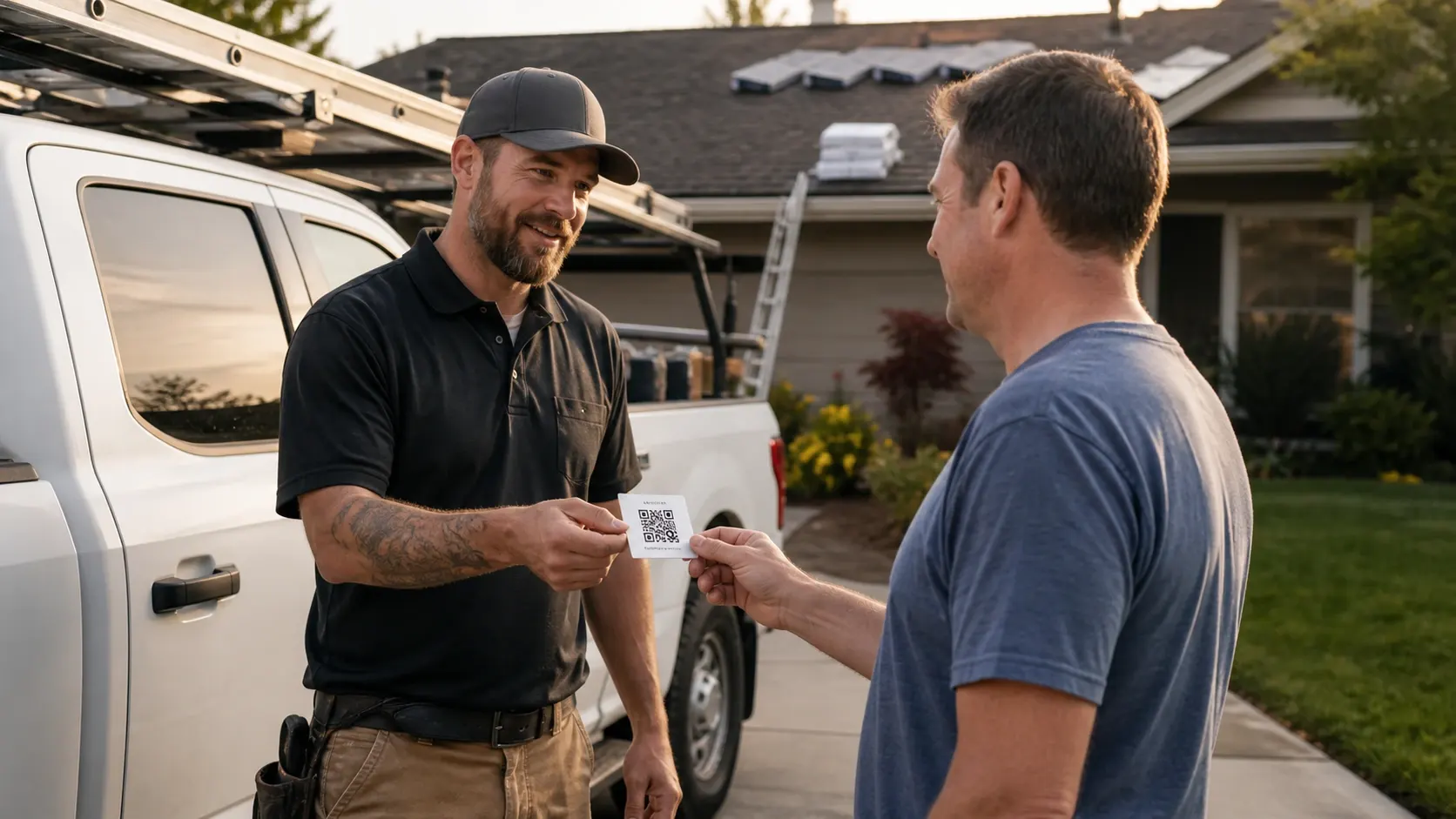
A QR code is the underused tool for in-person trades. Print it on a job-completion card, the invoice, the estimate folder, or a magnet on the truck. When the work is done, hand the card over and point at the code. The customer scans it with the phone already in their hand, lands on the review form, and writes it before you drive off.
The reason this works is the same reason text works: it removes the steps between “yes, I’ll review you” and the review actually being written. No remembering later, no finding the link in an email, no navigating to your profile. The review gets finished while the job is still the most interesting thing in the customer’s day.
Ask every real customer honestly
Whatever channel you use, the rule does not change: ask every real customer, and do not filter out the ones you think might leave a less-than-perfect review. Selectively sending the link only to happy customers is called review gating, and Google treats it as a policy problem. Honest reviews from real jobs are what make the profile believable to the next homeowner anyway.
Never offer a discount, free service, or reward in exchange for a review. The goal is a steady flow of genuine reviews tied to completed work, not a suspicious spike of vague five-star posts. Trades businesses have an advantage most industries do not: you are physically in the customer’s home when the experience is at its best. Use that moment. The email list was never the point.