
Websites · Field notes · 6 min read · By Alexander Bishop
Do you need a Google Business Profile and a website, or just one?
Your Google Business Profile and your website do different jobs. One gets you on the map; the other is the asset you actually own. Here is how they fit.
They are not the same thing
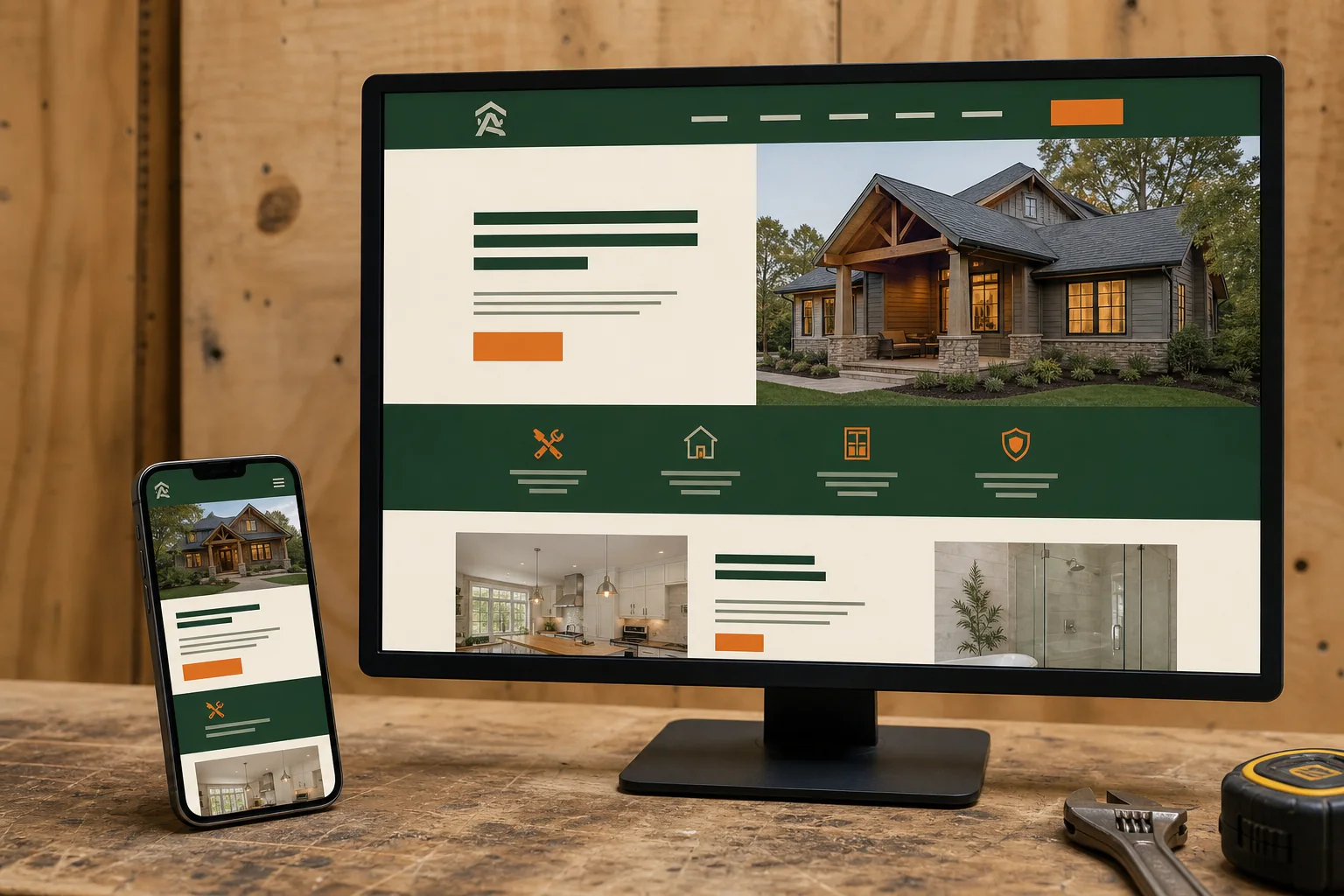
Some contractors treat the Google Business Profile and the website as interchangeable, as if having one means you can skip the other. They are built for different jobs. The profile exists inside Google Maps and Search. It is structured, fast to scan, and tuned for the moment a homeowner is picking between three nearby businesses. The website is the place you control, where you can explain the work in depth, show real proof, and make the case for the call without a character limit.
Google decides what the profile looks like, what fields exist, and how it ranks. The website is yours: the domain, the pages, the copy, the photos, the code. Both matter. A great profile with no website behind it sends people nowhere useful. A great website nobody can find on the map still loses to the competitor who shows up.
What the profile does best
The Business Profile is built for discovery and quick comparison. When someone searches “HVAC near me,” the profile is what appears in the map pack: business name, rating, review count, distance, hours, and a clickable phone number. That is the moment a contractor wins or loses most local jobs. Getting the category, services, hours, photos, and reviews right directly affects whether the business shows up at all.
The profile also carries structured trust signals Google can verify: a confirmed address or service area, consistent hours, a real phone number, and a steady flow of reviews. Google uses those to decide which businesses are legitimate and active. For the map, the profile is the asset. No amount of website polish replaces a neglected profile in the local pack.
What the website does that the profile cannot
A profile gives a homeowner the basics in a few seconds. The website is where they go to decide whether to actually call. Useful service pages explain what you repair, install, or replace, the problems you solve, the area you cover, and what makes you credible. Real photos, licenses, specific reviews, and clear company information sit close to the decision in a way the profile’s limited fields cannot match.
The website is also the asset you own outright. Google can change how profiles display, restrict features, or suspend a profile that breaks a rule. A listing site can shut down. A social platform can change its terms. Your domain, your pages, and your content stay yours. When a homeowner clicks through from the profile, the website has to finish the job the profile started.
Why weak websites waste strong profiles
A profile can do its job perfectly—right category, great reviews, accurate hours, strong map position—and still lose the customer at the website. If the page is slow, vague, missing on a phone, or impossible to navigate, the homeowner backs out and calls the next business in the pack. The ranking got you found. The website failed to get you called.
The fix is not a flashy redesign. The first screen should confirm the service, the area, and how to contact you. Major services need their own useful pages. The phone number should be tappable. The form should send somewhere you actually check. None of that is glamorous, and all of it matters more than animation. A fast, clear, honest site converts the visibility the profile earned.
Make them tell the same story
The profile and the website should agree. The business name, phone number, address or service-area setup, services, and hours should match across both, and across every other place the business appears online. When the profile says one thing and the website says another, it creates doubt for both customers and search engines. Consistency is a trust signal; drift is a red flag.
Treat the two as one local system rather than separate projects. A useful profile attached to a clear website, both kept current, is what actually wins local work. If you have to choose where to start, fix the profile first so you show up, then build the website that turns that visibility into calls.