
Websites · Field notes · 2 min read · By Alexander Bishop
What a home service website actually needs
Skip the bloated feature list. A useful contractor site answers a handful of questions fast, especially on a phone.
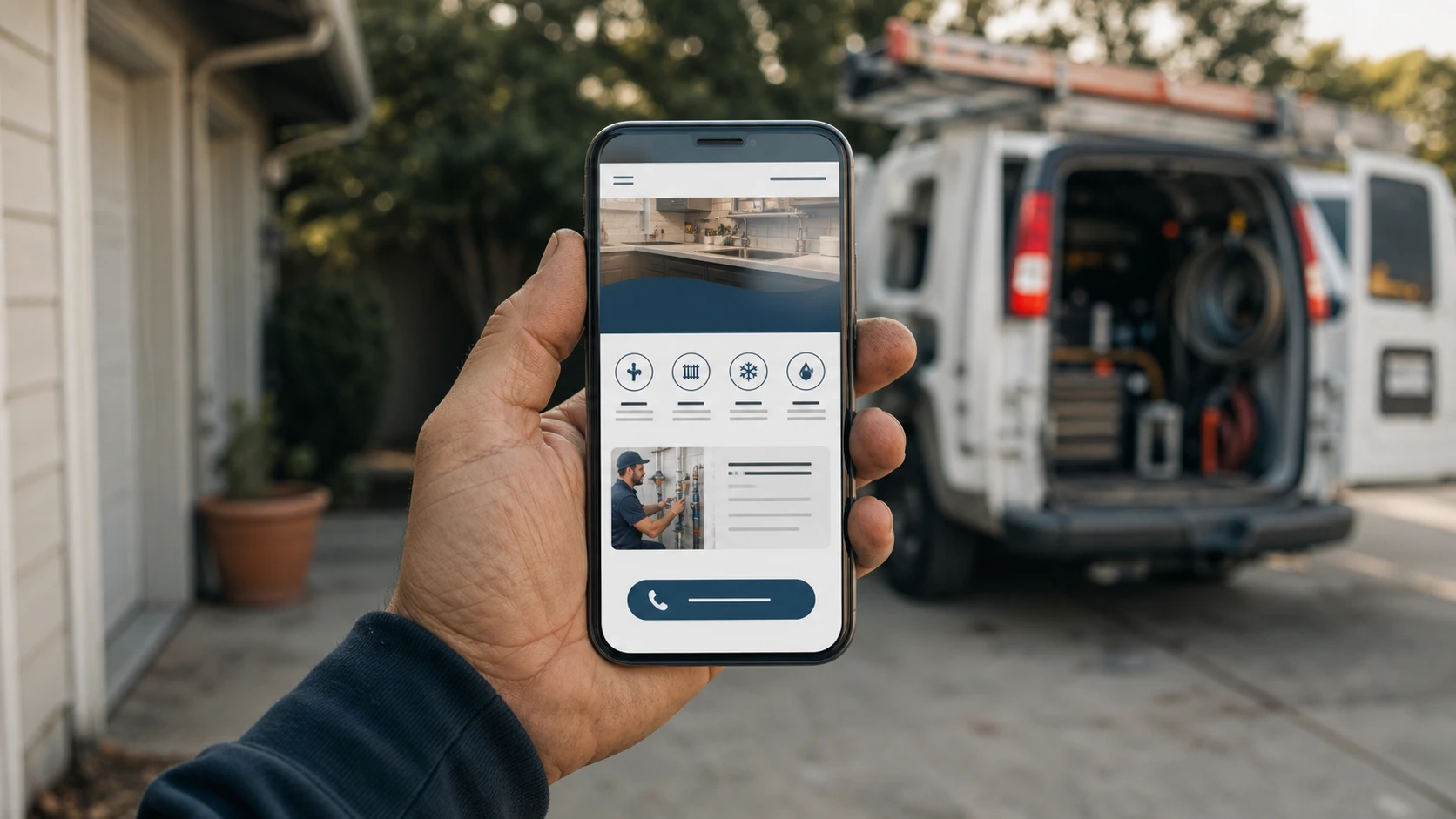
Say what you do immediately
The first screen should name the service, the general location, and the next step. Clever taglines can wait. A homeowner should know within seconds whether they are in the right place.
Make proof easy to scan
Use real project photos, specific reviews, licenses where relevant, and clear company information. Proof should sit near the service decision—not hide on a forgotten gallery page.
Build useful service pages
Give major services their own helpful page. Explain the problem, the work, common questions, and the area served. Avoid mass-producing thin town pages with the same paragraph repeated.
Make calls and forms work
Phone numbers should be tappable. Forms should be short. Track submissions and calls so you know whether the site is helping. Then test every path before launch.
A slow mobile site loses the call before the copy gets read
Test the site on an ordinary phone connection, not only office Wi-Fi. Compress job photos, give images fixed dimensions, keep scripts small, and make the call button available without waiting for an animation or pop-up. Speed is part of the contact path: a homeowner staring at a blank hero can return to Maps and call the next business.